


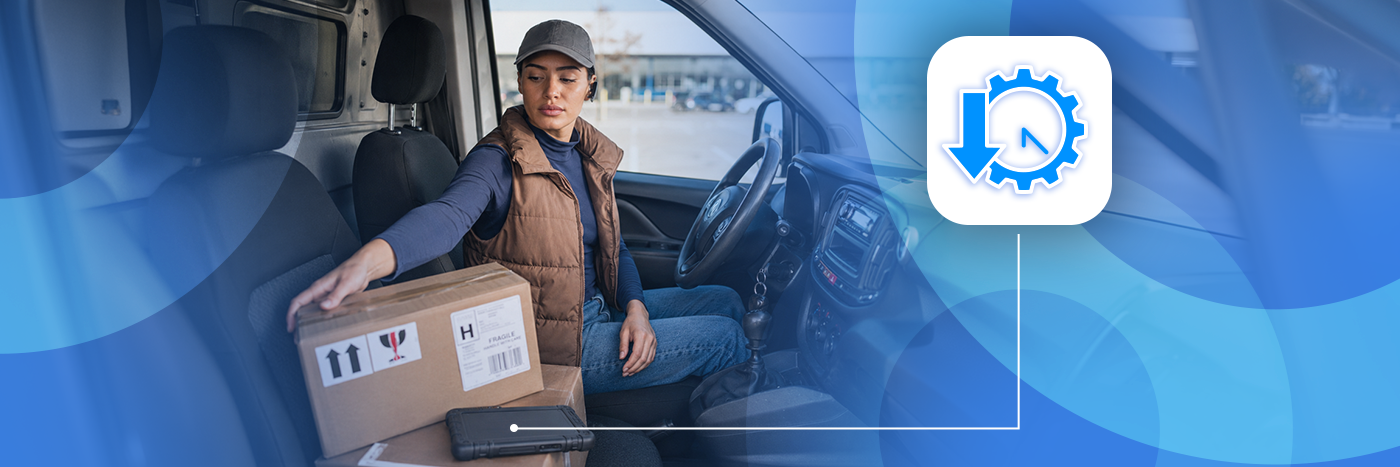
A delivery driver is halfway through their route when the handheld device they rely on to scan packages, access delivery information and capture proof of delivery suddenly freezes. After several unsuccessful attempts to restart it, they contact IT for support.
Unlike a warehouse environment, there isn't a replacement device sitting a few feet away. The driver can wait for the device to start working again, attempt to complete deliveries manually or abandon their route altogether to return to the distribution center for a replacement.
As time passes, deliveries begin falling behind schedule. Customers don't receive expected updates. Planned delivery windows start to slip. What began as a single device issue is now impacting the rest of the day's route.
At first glance, the problem seems minor. One device stopped working. But when the same types of issues occur across dozens of drivers, routes and distribution centers, small device disruptions can quickly become major delivery delays.
Transportation and logistics organizations operate on tight schedules. Customers expect accurate tracking updates, predictable arrival windows and on-time deliveries. When shipments arrive late, revenue, customer satisfaction and business reputation can all take a hit. The challenge is that delivery delays can be caused by the devices drivers depend on every day.
Are Device Health Issues Slowing Drivers Down?
Delivery drivers rely on mobile devices to navigate routes, scan packages, update shipment statuses and communicate with dispatch teams.
But when these devices aren't performing properly, productivity suffers. If a scanner freezes, a battery dies halfway through a route or an app takes minutes to load, these small delays compound.
One of the most overlooked contributors to delivery delays is device health. If organizations aren't monitoring battery performance, app stability and device conditions, issues often remain hidden until a driver is forced to stop working.
The question is simple: how many device problems are waiting to become delivery problems?
Organizations looking to better understand device health and performance can explore how real-time visibility helps identify potential issues before they disrupt operations in Unlocking SOTI MobiControl XS: Total Visibility Starts Here.
What Happens When Drivers Lose Connectivity?
Deliveries don’t stop because a device loses connectivity. However, shipment information, route updates and proof-of-delivery data may no longer be available when needed. As a result, drivers either have to wait for their device to reconnect, contact dispatch or complete tasks later.
In some situations, delivery tracking updates may be delayed, leaving customers wondering where their package is.
Are Outstanding Updates Creating New Problems?
Many organizations delay software updates because pulling devices out of service can be difficult. Unfortunately, delaying updates for too long can introduce new problems.
Apps may become unstable. Device performance can decline. Compatibility issues may begin affecting devices across the fleet.
Drivers don't necessarily see the root cause. They only experience the symptoms. A device loads slowly. An app crashes. A workflow that normally takes seconds suddenly takes minutes.
When these issues affect multiple drivers, delivery schedules can quickly fall behind. Maintaining a consistent approach to updates and device management can help reduce the likelihood of these disruptions affecting daily operations.
Is Reactive Troubleshooting Making Delays Worse?
What happens when a driver encounters a device issue in the middle of a route?
The delivery schedule doesn't pause while IT investigates. The driver loses valuable time.
That's why reactive troubleshooting can be particularly challenging in transportation and logistics environments. By the time a support ticket is opened, deliveries are delayed, and customer expectations are likely impacted.
IT teams still play a critical role in resolving issues. However, organizations that rely entirely on reactive support often find themselves responding to the next problem instead of preventing it.
The goal should be to identify issues before drivers encounter them whenever possible.
Looking Beyond the Delayed Delivery
When deliveries start running behind schedule, it's easy to focus on traffic, weather conditions or route planning. But the root cause could be sitting in the driver's hand.
Device performance, battery health, connectivity and software stability all influence how efficiently drivers can complete their work. That's why solving delayed deliveries often requires looking beyond the delivery itself.
The question is simple: are delivery delays being caused by operational challenges, or is your technology contributing to the problem?
